On this page
- Pick the learning task you actually want
- Choose the basket before choosing the grinder
- Start with the correct manual and a safe setup
- Make adjustments you can understand
- Decide whether preground coffee is the right starting route
- Continue your setup comparison
- Use the Bambino as a defined learning route
- Split the first session into manageable tasks
- Learn to distinguish a control from an outcome
- Make milk a separate lesson
- Know when to stop adjusting
- Frequently asked questions
Pick the learning task you actually want
Our beginner recommendation is a decision method rather than an unsupported winner: select the basket and coffee route first, then buy only the equipment needed for it. A person who wants to practice grinding should compare the grinder controls as carefully as the machine. Someone who wants to learn steaming first can evaluate the manual's preground route without pretending that both routines are identical.
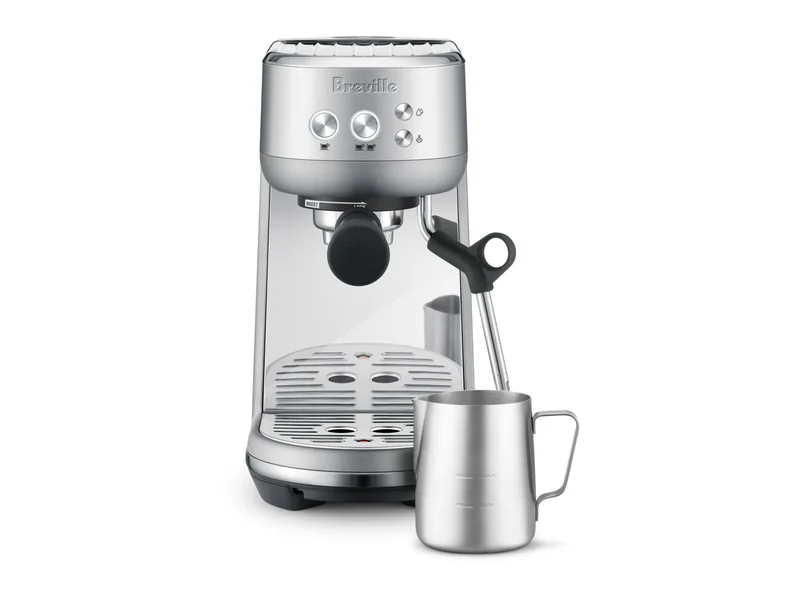
The Bambino is an example to research because the manufacturer documents those choices and its manual milk workflow. It is not a promise of effortless results or a verified under-$500 bundle. Check current price and what the selected package contains before deciding.
Write down what you want to learn during the first week. Keep the goal small enough to repeat: making a drink you enjoy with a routine you understand. Do not make equipment upgrades the measure of progress. A useful improvement is being able to explain why you changed a setting and whether you preferred the next cup.
Choose the basket before choosing the grinder
A filter basket is the small metal cup that holds ground coffee inside the portafilter, the handled part you lock into the machine. Breville's Bambino manual distinguishes single-wall baskets for freshly ground whole beans from dual-wall baskets for preground coffee. It also describes adjusting grind and dose when changing basket size. Those instructions are for the BES450, rather than a universal rule for every espresso machine.
For a first setup, decide which of those documented routes you intend to follow. If you plan to buy preground coffee, check that the exact package includes the basket specified for it. If you plan to grind beans, read the grinder's intended use and the machine's basket guidance together. A grinder advertised broadly for coffee still needs to suit your chosen espresso workflow.
Do not order a replacement basket just from a diameter printed in a listing. Ask the accessory maker to identify the exact compatible machine and portafilter. Basket depth, rim and attachment details also deserve checking rather than guessing. Keep the basket that comes with the machine while you learn the machine. Changing several components immediately makes it harder to tell which change helped or caused a problem.
Start with the correct manual and a safe setup
Use the instructions for your exact machine and market. The Bambino US manual includes electrical and hot-surface precautions, first-use preparation and a rinsing cycle. Read them before brewing. Check that the product and power arrangement suit your location rather than treating an adapter as a solution to every electrical mismatch.
Clear the counter before filling or operating the machine. Keep the water container and removable components positioned as the manual directs. Do not reach toward an outlet while the machine is discharging hot water or steam. Let the relevant parts cool as instructed before handling them for cleaning. If the appliance behaves unexpectedly, stop and consult its troubleshooting and support guidance.
Do not use online recipes to override safety steps or to dismantle protected parts. The advice here is a way to organize your decisions and practice; it does not replace the manual. If you are buying secondhand, obtain the official instructions and verify that the necessary parts are present before use. A missing component or unreadable model label is a reason to investigate before turning the machine on.
Make adjustments you can understand
Choose one basket and one coffee for the first practice session. Record the grind setting, the amount of ground coffee used and the amount of drink collected. A small scale can make that record easier to repeat, but verify that it fits the working space before buying one. Treat your notes as a way to compare attempts, not as a scorecard.
The Bambino manual explains that grind size changes how quickly water passes through the coffee. Its troubleshooting guidance connects a fast pour with coarse grinding or insufficient coffee, and a restricted pour with grinding that is too fine. Use that guidance only within the manual's directions for the machine and basket. A fixed internet recipe should not override the manufacturer.
Change one thing on the next attempt. If you change the grind setting, leave your chosen dose and stopping point alone long enough to compare the result. Taste the drink you actually plan to make. Someone who usually adds milk may value a different result from someone drinking the shot by itself. Do not judge a machine from one unfamiliar coffee or assume that an expensive accessory will correct an unexplained problem.
Decide whether preground coffee is the right starting route
The BES450 manual assigns preground coffee to dual-wall baskets and freshly ground beans to single-wall baskets. Source: Bambino instruction manual This creates a useful beginner decision before you spend on a grinder: do you want to learn coffee preparation and milk handling first, or is grinding part of the activity you came to learn? Neither answer requires buying a replacement basket before using the equipment that comes with the machine.
Our advice for a preground start is to tell the coffee seller which machine and basket you intend to use. Keep the packaging so you can identify the coffee again. You cannot change the grind of coffee already in a bag, so a disappointing result should send you to the manual's applicable troubleshooting rather than to a grinder setting that is unavailable in this route.
For a fresh-bean start, make room in the equipment plan for grinding, collecting and transferring the grounds. Decide whether those actions appeal to you before paying for them. Moving to whole beans later is a new equipment decision you can make after understanding the initial routine; it need not be a condition for beginning with the documented preground route.
Continue your setup comparison
Use the complete $500 setup worksheet to keep every required item in the same purchase limit. For the next decision, read Best Home Espresso Machine for a $500 Setup, Best Compact Espresso Machine: Fit Your Kitchen, Best Espresso Grinder for a Budget Home Setup.
Use the Bambino as a defined learning route
Our beginner recommendation is the Bambino BES450 when you want to learn a portafilter machine and accept manual milk texturing. Its manual describes both dual-wall and single-wall baskets, which lets you choose between a preground start and a freshly ground route. It also documents preset shots and manual extraction. Those are specific learning options rather than a promise that a first attempt will taste perfect.
Start by choosing one basket and one coffee. Resist the temptation to compare several beans, replacement baskets and tampers during the first session. Our suggested goal is to become comfortable repeating the documented preparation safely. Once you can repeat the actions, you can decide which part of the result you want to change.
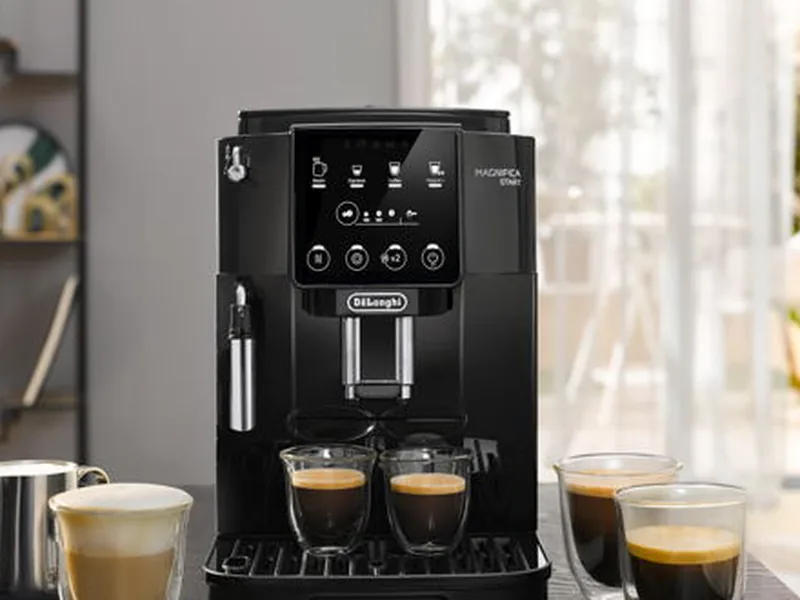
A beginner who wants automatic black-coffee preparation should consider a different route. DeLonghi's ECAM22022B documents one-touch espresso, coffee and Americano, alongside a built-in grinder and manual frother. That makes it a candidate for someone who prefers choosing a recipe to preparing a separate portafilter. It is not a recommendation for automatic milk drinks.
Split the first session into manageable tasks
First, read the safety and first-use sections of the BES450 manual and complete its preparation sequence. Then identify the tank, basket, portafilter, shot buttons and steam control while the machine is in the state the manual requires for that task. Do not start learning by pressing unfamiliar controls at random. The manual's rinse and setup directions belong before a drinking recipe.
For the first coffee, follow the dose guidance for your chosen basket, distribute the grounds and tamp as directed. Attach the portafilter using the manual's alignment marks, put the cup beneath it and use the documented preset control. Keep hands away from hot outlets. This overview is a way to organize the session; the exact controls and precautions remain those in the official instructions.
Afterward, write down what you did before deciding whether to adjust anything. Include which basket you used and whether the coffee was preground. A note saying only that the shot was disappointing gives you little to work with next time. A note that records the preparation lets you compare the next attempt to something concrete.
Learn to distinguish a control from an outcome
A preset shot button is a control you can operate. A beverage that tastes balanced to you is an outcome you must assess. Do not assume that successfully pressing the button proves you have finished learning the coffee preparation. Conversely, a cup you dislike does not establish that the machine is defective.
The Bambino manual's extraction troubleshooting connects fast and slow flow with preparation variables including grind and dose. Use that table for this machine rather than borrowing an exact recipe from an unrelated model. Source: Bambino instruction manual Our advice is to identify the symptom, check the relevant instruction and change one supported variable at a time. Record the new setting before making the next cup.
For example, if you are learning with freshly ground coffee, keep the basket and dose consistent while following the manual's grind guidance. If you change the basket at the same time, the next result will be harder to interpret. When using preground coffee, recognize which controls are available to you and consult the manual rather than assuming you can adjust the grind already in the bag.
Make milk a separate lesson
Breville describes the BES450 milk routine as manual. Its manual includes steam-wand use, purging and cleaning. Source: Bambino instruction manual Treat those as a separate sequence to learn once you are comfortable with the brewing controls. Preparing coffee and learning a new hot-steam task in the same rushed session is an avoidable burden you can remove from your practice plan.
Lay out the jug, cloth and cup before beginning, following the manufacturer's handling instructions. Read how to stop steaming before you start. Plan where the jug will go afterward so you do not have to improvise while holding it. Do not regard a photograph of latte art as an instruction for safe wand operation.
Our suggested success criterion for an early milk session is completing the documented routine and cleaning correctly. Decide later whether you want to practice a particular texture or pouring pattern. If the entire milk task feels unwelcome, revisit the machine format rather than ordering more accessories in the hope that they will make the procedure automatic.
Know when to stop adjusting
A useful practice record has a small number of columns: basket, coffee, dose, relevant setting, beverage observation and next action. Write the next action before starting another cup. If you cannot explain why you are changing a setting, pause and return to the manual's troubleshooting section.
Do not keep brewing through a warning, leak or unexpected behavior that the instructions tell you to address. Follow the manufacturer's troubleshooting and service route. Learning a routine is different from disassembling equipment or bypassing a safety instruction. A general guide should not supply a guessed repair for an unfamiliar fault.
At the end of your first week, review the record for one recurring difficulty. If grounds transfer is awkward, investigate that specific step. If measuring is inconvenient, consider the measuring tool you need. If you dislike manual preparation itself, accessories are unlikely to change the format you chose. Let that distinction guide the next purchase instead of treating every beginner problem as a reason to upgrade the machine.
Frequently asked questions
Which espresso workflow should a beginner choose?
Choose the routine you want to learn. On the Bambino, the manual specifies a preground route with dual-wall baskets and a freshly ground route with single-wall baskets.
Can I start with preground coffee?
For the Bambino BES450, the manual specifies dual-wall baskets for preground coffee. Check the equivalent guidance for any other model.
Is the Bambino milk routine automatic?
Breville describes manual milk texturing on the Bambino BES450. Read its steam-wand instructions before deciding whether the routine suits you.
What should I change after a disappointing shot?
Consult your machine manual first. Record your starting setup and change one preparation variable at a time so you can compare the result.
Is a complete beginner setup guaranteed below $500?
No. Check current price for the machine, any needed grinder and missing essentials, then include applicable tax and shipping.
Sources
- Breville US: the Bambino BES450(provider page)Accessed
- Breville: Bambino US instruction manual, linked by manufacturer(provider page)Accessed
- Magnifica Start documentation(provider page)Accessed
Related guides
- Best Home Espresso Machine for a $500 SetupCompare home espresso setup choices for a $500 planning limit, with Bambino basket guidance and a checklist for complete checkout costs.Read the guide
- How to Make Espresso at Home: A Careful First RoutineFollow a Bambino BES450 brewing sequence from basket choice and dosing to tamping, extraction and a recorded adjustment for the next shot.Read the guide
- Breville Espresso Machine Portafilters: Sizes and BasketsBreville's home espresso machines use either a 54 mm or 58 mm portafilter. Here's the size for each model, plus how the filter baskets differ.Read the guide