On this page
- Choose the workflow before the grinder
- Compare these three candidates
- When the Encore ESP makes sense
- When the Smart Grinder Pro makes sense
- When the J-Ultra makes sense
- Build a budget that includes the machine
- Dial in without changing everything at once
- Spend on an identified problem
- Frequently asked questions
Choose the workflow before the grinder
The best purchase is the one that solves your actual morning problem. If turning a handle would make you skip brewing, a manual grinder is poor value for you even if its purchase price fits. If you make one espresso and put everything away, a hand grinder deserves a closer look. If you want to leave beans ready and repeat a programmed grind time, compare electric controls instead.
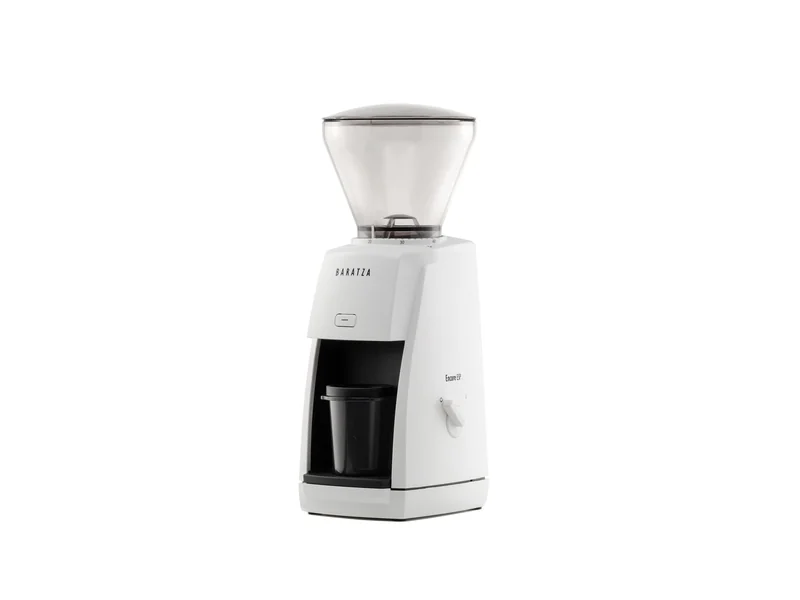
Our editorial starting point is the Encore ESP for someone who wants electric grinding without making a timer the center of the decision. Baratza describes a hopper adjustment and an included dosing cup intended to simplify espresso preparation. That makes it a relevant candidate for a straightforward routine, although a product description cannot establish how easy you will find dialing in a particular coffee.
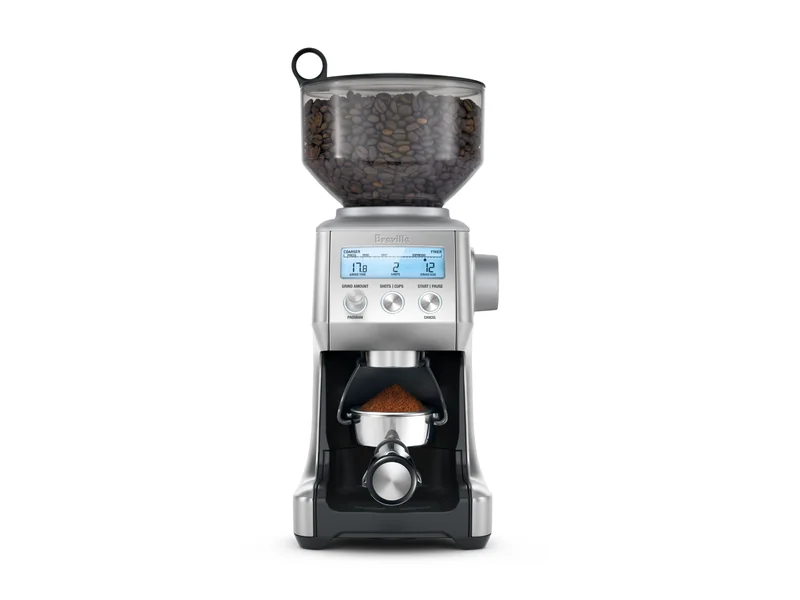
The Smart Grinder Pro is the alternative to examine when timed dosing matters. Breville documents a programmable conical burr grinder with 60 settings and the option to grind into a portafilter or a container, and its US page listed $199.95 on November 22, 2026. Choose it for those controls, rather than treating the number of settings as a quality score.
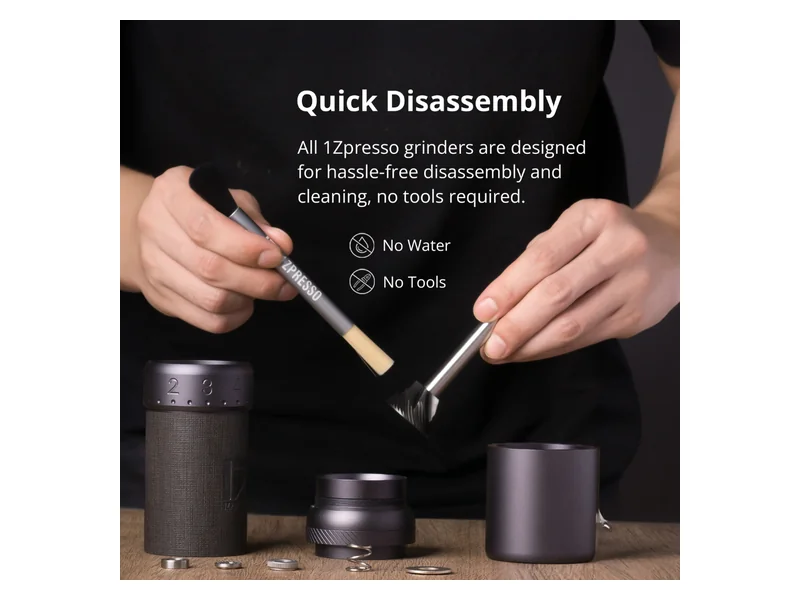
The J-Ultra is the manual option in this comparison. Its manufacturer describes espresso-focused adjustment in 8-micron increments and a foldable handle. Consider it if you are willing to exchange motor convenience for a hands-on routine. We have not measured grinding effort or speed, so neither is a reason to declare it the winner.
For the machine side of the decision, compare the best home espresso machine options. A grinder budget only makes sense alongside the machine and basket you will actually use.
Compare these three candidates
| Grinder | Documented feature | Our editorial fit | Decision to make before buying |
|---|---|---|---|
| Baratza Encore ESP | Hopper adjustment and included dosing cupSourceBaratza Encore ESP documentation | Electric espresso preparation with a cup-based transfer routine | Do you prefer collecting grounds before filling the basket? |
| Breville Smart Grinder Pro | 60 settings, programmable timed dosing, portafilter or container grindingSourceSmart Grinder Pro documentation | Someone who wants a repeatable timer setting and a choice of collection methods | Will you weigh and check the resulting dose rather than assuming time equals weight? |
| 1Zpresso J-Ultra | Manual grinding, 8-micron adjustment and foldable handleSource1Zpresso J-Ultra documentation | Someone comfortable doing the grinding by hand | Will the manual routine still suit you when making another drink? |
GrinderBaratza Encore ESP
- Documented feature
- Hopper adjustment and included dosing cupSourceBaratza Encore ESP documentation
- Our editorial fit
- Electric espresso preparation with a cup-based transfer routine
- Decision to make before buying
- Do you prefer collecting grounds before filling the basket?
GrinderBreville Smart Grinder Pro
- Documented feature
- 60 settings, programmable timed dosing, portafilter or container grindingSourceSmart Grinder Pro documentation
- Our editorial fit
- Someone who wants a repeatable timer setting and a choice of collection methods
- Decision to make before buying
- Will you weigh and check the resulting dose rather than assuming time equals weight?
Grinder1Zpresso J-Ultra
- Documented feature
- Manual grinding, 8-micron adjustment and foldable handleSource1Zpresso J-Ultra documentation
- Our editorial fit
- Someone comfortable doing the grinding by hand
- Decision to make before buying
- Will the manual routine still suit you when making another drink?
Check current price for each model. Compare the exact product name on the seller's page with the name in the official documentation. An Encore listing is not automatically evidence for the Encore ESP, and a different J-series grinder should not inherit the J-Ultra specifications.
This shortlist compares documented functions. It does not rank taste, noise, retention, longevity or grinding speed. We have no controlled measurements for those outcomes. Manufacturer claims about flavor are also not independent tasting evidence, which is why they do not determine the recommendations here.
When the Encore ESP makes sense
The Encore ESP belongs on your shortlist if electric grinding is a requirement and you like the idea of collecting grounds in a dosing cup. Baratza explicitly connects the model's adjustment and included cup with espresso preparation. That is useful evidence of its intended workflow. It does not establish a universal starting setting for your beans.
Picture your counter before choosing. Where will the cup sit while you weigh beans or grounds? Can you transfer the coffee into the basket without balancing it over the sink? These are practical questions you can answer with your own equipment, and they matter more than an unsupported promise that a grinder will improve every shot.
Our conditional recommendation is to start here when you want an electric candidate and do not specifically need Breville's programmable timing. Compare the current delivered cost and the seller's return conditions before deciding between them. This is a workflow preference, not a claim that the Encore ESP produces better espresso.
Do not assume accessories fit because both products are described as espresso equipment. Read the current instructions for the grinder and machine, check the transfer method, and ask the seller about any unresolved fit question before ordering. Avoid buying an adapter on the assumption that you must need one.
When the Smart Grinder Pro makes sense
Breville documents 60 grind settings, programmable digital timing and grinding into a portafilter or an airtight container. Those features make the Smart Grinder Pro a useful candidate if you want to save a grind-time setting and repeat that action each morning.
Its US page lists a small portafilter cradle for 50 to 54 mm and a large cradle for 58 mm, along with a grounds container and a conical burr cleaning brush. Those are the manufacturer's listed accessories, not a promise that every portafilter with one of those nominal diameters will sit securely. Confirm your actual handle and basket arrangement.
Timed dosing means controlling how long the grinder runs. It is not a documented promise of a particular weight for every dose. Our advice is to check the grounds with a scale, especially after changing coffee or grind setting. Keep the timer as a convenience and let the measured result tell you whether it needs adjustment.
Breville lists dimensions of 8.5 inches wide, 6.3 inches deep and 15.3 inches high. Measure the proposed location, then allow practical access for filling and the cleaning steps in the instructions. The listed height alone does not tell you whether you can comfortably work beneath a cabinet.
This is our conditional choice when the timer and collection options solve a real inconvenience. If you will weigh each portion and collect it in a cup anyway, decide how much those extra controls matter to you before paying for them.
When the J-Ultra makes sense
The J-Ultra is worth considering when you accept manual grinding as part of making coffee. 1Zpresso describes its burr as optimized for espresso and gives an 8-micron adjustment increment. That is a specification about the adjustment mechanism, not a measurement of the particles in your cup.
The official page also describes a foldable handle and a magnetic catch cup with a stated capacity of 35 to 40 grams. Treat the capacity as manufacturer guidance, not a recommended espresso dose. Your basket instructions should determine how much coffee belongs in the basket.
Our editorial fit is someone making a small number of drinks who actively prefers a manual tool. Before choosing, imagine repeating the entire routine for a second person: measure the beans, grind, transfer, prepare the basket and brew again. The relevant question is whether you welcome that work. We do not have timed comparisons that justify calling it fast or slow.
For a US buyer, check the actual seller's delivery terms and service arrangements. The manufacturer has an international storefront, so a price shown online should not automatically be treated as your final US delivered cost. Confirm any shipping or import charges shown for your order before comparing totals. No current stock or final delivered price is promised here.
Build a budget that includes the machine
Start by writing down what your budget covers. A grinder-only allowance and a complete espresso setup allowance are different shopping problems. If you already own a suitable machine, focus on the grinder and necessary accessories. If you own nothing, calculate the machine and grinder together before adding optional tools.
Use a short worksheet with separate lines for the machine, grinder, required accessories, tax and delivery. Enter current quoted amounts yourself. Keep optional upgrades in another part of the worksheet so they do not quietly become requirements. This page does not supply a current total because the seller, destination and equipment choices have not been established.
If your ceiling is $500 for everything, subtract the actual machine total first. The amount left must cover the grinder and anything still necessary to brew. If the shortlist does not fit, postpone the purchase, compare another documented option, or reconsider the equipment format. Do not interpret a grinder recommendation as proof that a complete package fits that ceiling.
Used equipment can be another budgeting route, but inspect the exact item rather than assuming a familiar model name makes it good value. Ask what is included and whether the seller permits inspection or return. Our recommendation is to price the missing accessories before agreeing to buy. We make no claim about the condition or warranty coverage of any used unit.
If you are still deciding between separate equipment and a combined machine, read espresso machines with a grinder. Compare complete purchase totals and the routine you want, rather than comparing one grinder price with an entire machine price.
Dial in without changing everything at once
Dialing in means adjusting preparation until the result suits your coffee and basket. Follow the machine and grinder instructions for the initial setup. Avoid treating a setting posted for someone else's coffee as a guaranteed recipe for your equipment.
For a useful comparison, choose one coffee and record the dose you put in the basket. Measure the beverage you make and note how it tastes to you. Change one preparation variable at a time so your next result tells you something. This is a suggested learning method, not a manufacturer-specific recipe.
If you change the grind, keep your other preparation choices steady for the next attempt where practical. If you change the dose as well, you will have less information about which adjustment helped. Record the result in a few words rather than relying on memory after several attempts.
Keep adjustment instructions model-specific. Check whether the manufacturer requires a particular operating state before moving finer, and follow that instruction. Do not force an adjustment because another brand's tutorial shows a different method. Likewise, clean only the parts and in the way the current manual permits.
With a timed electric routine, weigh the collected dose when establishing a setting. With a manual routine, record your adjustment position in the format the manufacturer uses. Both records are useful starting points when you return to the same coffee, but neither removes the need to check the result.
For the rest of preparation, use how to make espresso at home. Keep the grinder decision connected to brewing rather than judging it only by a specification table.
Spend on an identified problem
Before replacing an existing grinder, write down the problem you want to solve. Is adjustment awkward? Do you dislike the collection method? Is the manual work the reason you avoid making coffee? A clear answer helps you choose between these candidates without inventing a taste ranking.
Our editorial preference is to buy the least elaborate option that meets your documented requirements and fits your routine. A timer is useful when you want one. Manual grinding is acceptable when you enjoy or accept it. Neither preference makes someone else's choice wrong.
Read the cleaning instructions before purchase and check that you can obtain help for the exact model from the seller or manufacturer. Do not assume a brand name establishes local service terms. Save the product listing and order details so you know what was represented when you bought it.
You can also reduce unnecessary spending by delaying accessories until there is a clear need. Compare the espresso accessory guide against what comes with your machine and grinder. A tool should solve a preparation problem you can describe, rather than fill an empty spot beside the machine.
Choose the Encore ESP to investigate a simple electric cup-based workflow, the Smart Grinder Pro when its timer and collection choices matter, or the J-Ultra when manual grinding suits you. Check current price, confirm the exact model, and use your complete equipment total as the buying limit. Those conditions are more useful than an unsupported universal winner.
Return to the home espresso hub to compare the grinder allowance with your complete equipment budget.
Frequently asked questions
Which budget espresso grinder should I compare first?
Compare the Encore ESP for a simple electric cup-based routine, the Smart Grinder Pro for programmable timing, and the J-Ultra for manual grinding with fine adjustment. These are workflow recommendations based on manufacturer documentation, not measured taste rankings.
Are these espresso grinders guaranteed to cost under $500?
No price ceiling is guaranteed here. Check current price, tax and delivery for the exact model. The Smart Grinder Pro lists at $199.95 on Breville's US page as of November 22, 2026, and with the BES450 at $299.95 the listed total is $499.90 before tax and delivery. If $500 is your whole setup budget, include the machine and required accessories before deciding what you can spend on the grinder.
Does the Smart Grinder Pro weigh each dose?
Breville describes programmable timed dosing. That feature controls grinding time and should not be treated as a promise of a particular dose weight. Check the collected grounds with a scale when establishing your routine.
What does the J-Ultra's 8-micron adjustment mean?
1Zpresso specifies an 8-micron adjustment increment for the J-Ultra. It describes the adjustment mechanism, not a guarantee that every ground particle has that size or that a particular setting will suit your coffee.
Should I buy a manual or electric espresso grinder?
Choose manual if you accept doing the grinding by hand for every drink. Choose electric if that work would discourage you from brewing. Compare the actual collection and adjustment routine before deciding, then check the complete delivered cost.
Sources
- Baratza US Encore ESP(provider page)Accessed
- Breville US Smart Grinder Pro(provider page)Accessed
- 1Zpresso J-Ultra(provider page)Accessed
Related guides
- Best Home Espresso Machine for a $500 SetupCompare home espresso setup choices for a $500 planning limit, with Bambino basket guidance and a checklist for complete checkout costs.Read the guide
- Espresso Machines With Grinders: What to CheckCompare the Barista Express integrated format with a separate Bambino and grinder setup by daily workflow and complete purchase cost.Read the guide
- How to Make Espresso at Home: A Careful First RoutineFollow a Bambino BES450 brewing sequence from basket choice and dosing to tamping, extraction and a recorded adjustment for the next shot.Read the guide
- Espresso Machine Accessories: Buy What FitsCheck included Bambino accessories before buying extras, identify missing tools and assess compatibility for your chosen espresso routine.Read the guide
- Grind by Weight Espresso Grinders: How They WorkGrind by weight stops the grinder when it hits a target dose. How it works, plus the Mahlkonig E64 WS and Baratza Sette 270Wi compared.Read the guide
- Single Dose Espresso Grinders: What to Look ForA plain look at single dose espresso grinders and what to compare: retention, burr size, speed, noise and dose consistency claims.Read the guide