On this page
- A practical starting point for US buyers
- Set a complete purchase limit
- Calculate the remaining budget for two routes
- Continue your setup comparison
- Choose between three complete equipment routes
- Compare the preground and whole-bean carts
- Keep the machine allowance separate from future upgrades
- Test the shortlist against your actual drinks
- Decide what would change your recommendation
- Frequently asked questions
A practical starting point for US buyers
We start from a machine with clear basket guidance and controls you can understand, plus a care routine you can actually keep up. The Breville Bambino BES450 is one documented example. Its US manual covers single-wall and dual-wall baskets, preset shot volumes and manual milk texturing. We have not tested it, and we have not established that a complete machine-and-grinder package fits under $500.
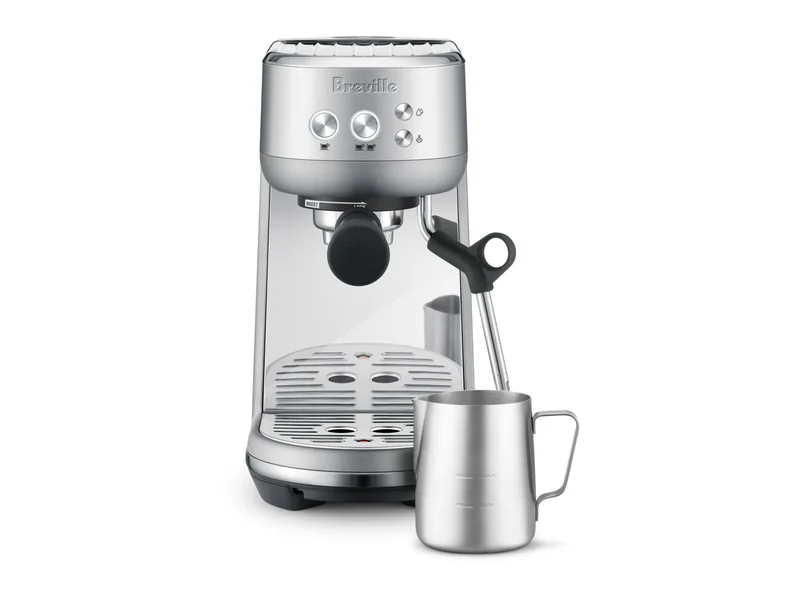
Treat it as a research candidate if you are happy to prepare the coffee yourself and live with a manual milk routine. If you want a one-touch milk drink instead, go to the automatic-machine guide before you spend anything. That distinction matters more than how many features a product card lists.
A useful shortlist can be very short. One candidate that fits your routine and has a verified total beats ten machines ranked on no current evidence. Keep the comparison tied to your own counter and your own coffee, and drop any option whose documentation leaves an essential question unanswered.
Set a complete purchase limit
Decide what your $500 limit covers before you compare a single machine. A machine-only limit is a different shopping problem from an all-in setup limit. Write down a separate allowance for the grinder if you need one, and leave room for tax and shipping. Add in any required tool the package you pick leaves out. And do not count a sale price until you can see it for the exact US model and seller.
Use a simple worksheet: machine checkout total, grinder checkout total, missing essentials, delivery charges. Add the entries up before you choose. This is a planning method, nothing more; it does not claim any particular bundle lands under $500. When we looked on November 22, 2026, the BES450 and BCG820 listed prices came to $499.90 before tax and delivery, so even a tight pairing leaves almost no slack. Check the current price on every item. A good-looking machine can still be the wrong buy if what is left over cannot cover the way you plan to use it.
Start with the gear you already own. A compatible tool sitting in your drawer does not need replacing just because a newer version looks nicer. But do not pretend a grinder you still have to buy costs nothing. If the total runs over your limit, trim the scope of the setup or wait. Do not lean on an unverified discount to make the arithmetic work.
Calculate the remaining budget for two routes
Breville's US BES450 page listed $299.95 when we checked on November 22, 2026. Set that against a $500 planning ceiling and $500 minus $299.95 leaves $200.05 for everything else, plus applicable tax and delivery. It is a dated listed-price sum. It is not a delivered quote, and it is no promise the same price is still live.
On the manual's dual-wall preground route, a new grinder is not part of the plan. The remaining $200.05 only has to cover missing essentials and checkout charges. On the freshly ground route, that same $200.05 also has to absorb a new grinder. The BES450 manual documents these basket choices.
That gives you a clean rejection rule. If the grinder alone costs more than $200.05, this newly bought whole-bean setup blows past the ceiling before you add a single other charge. If it costs less, subtract its real checkout amount and look at whatever is still outstanding. You cannot call either route affordable until you know its delivered total. If your ceiling covers equipment only, keep coffee consumption separate; if it covers everything you need to get started, put the first coffee order in too.
Continue your setup comparison
Use the complete $500 setup worksheet to keep every required item inside the one purchase limit. For what to read next, try Best Espresso Machine for Beginners: A First Setup, Best Compact Espresso Machine: Fit Your Kitchen and Best Espresso Grinder for a Budget Home Setup.
Choose between three complete equipment routes
Our starting recommendation is the Bambino BES450 with whichever basket suits your coffee. Go with its documented dual-wall route if you want to start on preground coffee. Go with the single-wall route and a separate espresso grinder if you want to learn grind adjustment. That split comes straight from the Bambino manual, which makes it more useful than handing every beginner the same equipment list.
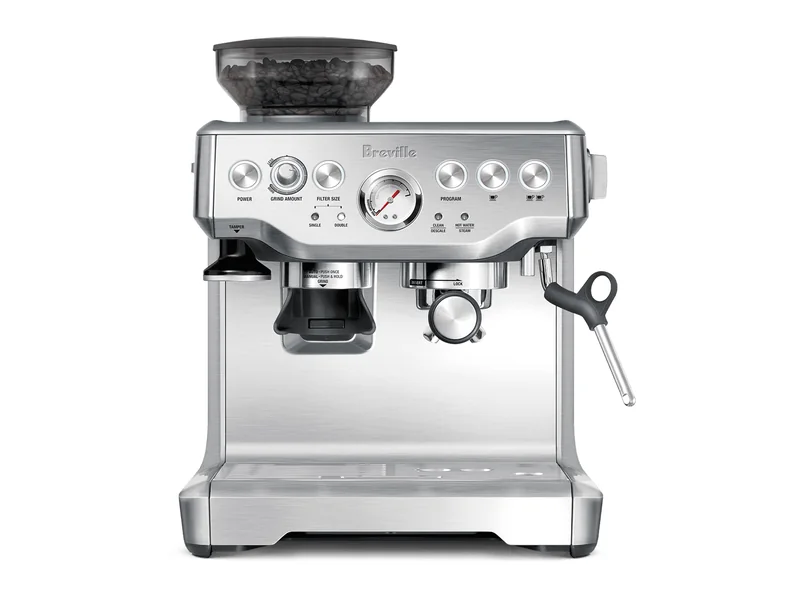
A second route is the Barista Express BES870. Breville documents an integrated conical burr grinder along with manual milk texturing. Look at it when you want the grinder and the brewing controls in one body and you are fine preparing the portafilter yourself. An integrated grinder does not turn the rest of those tasks into an automatic drink sequence.
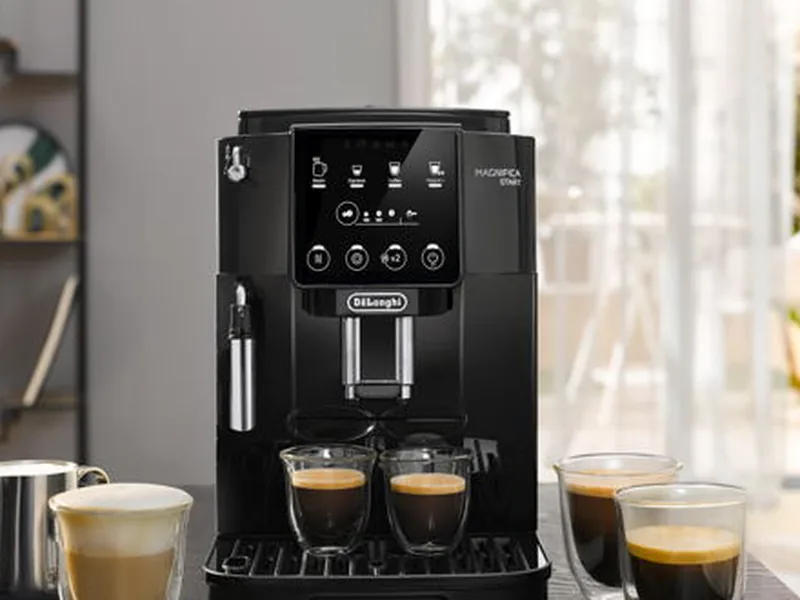
The third route is the DeLonghi Magnifica Start ECAM22022B. Its official US description lists one-touch espresso, coffee and Americano, a conical burr grinder with 13 settings and a manual milk frother. Our recommendation is to compare it when eliminating separate portafilter preparation matters more than practicing that preparation. Milk remains a separate hands-on decision for this exact model.
| Your priority | Candidate to investigate | Remaining decision |
|---|---|---|
| Start with preground coffee | BES450 with the manual's dual-wall basketSourceBambino instruction manual | Will you want a separate grinder later? |
| Grind and prepare the basket yourself | BES870 with integrated grinderSourceBarista Express documentation | Do you prefer one appliance for these tasks? |
| Select a black-coffee recipe from beans | ECAM22022BSourceMagnifica Start documentation | Does manual milk suit your drinks? |
Your priorityStart with preground coffee
- Candidate to investigate
- BES450 with the manual's dual-wall basketSourceBambino instruction manual
- Remaining decision
- Will you want a separate grinder later?
Your priorityGrind and prepare the basket yourself
- Candidate to investigate
- BES870 with integrated grinderSourceBarista Express documentation
- Remaining decision
- Do you prefer one appliance for these tasks?
Your prioritySelect a black-coffee recipe from beans
- Candidate to investigate
- ECAM22022BSourceMagnifica Start documentation
- Remaining decision
- Does manual milk suit your drinks?
These choices complete a workflow comparison without pretending to settle taste or durability. For example, a household wanting an Americano button has a documented reason to investigate the Magnifica Start. Someone wanting to practice tamping has a different reason to investigate the Breville portafilter route. Neither preference establishes a brand-wide quality winner.
Compare the preground and whole-bean carts
Make one cart for the Bambino with the equipment that comes with it and suitable preground coffee. Make another for the same machine with an espresso grinder. Using the same machine in both carts isolates the extra purchase required by the whole-bean plan. It avoids confusing a different machine's features with the decision to grind at home.
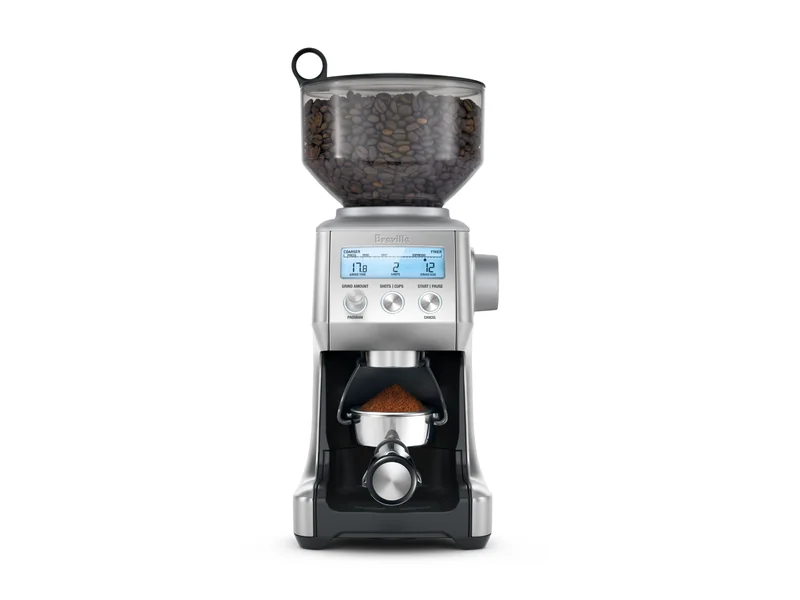
For the separate-grinder cart, the Smart Grinder Pro BCG820 is a documented example with 60 settings and programmable timed dosing. Source: Smart Grinder Pro documentation Breville's US page listed it at $199.95 on November 22, 2026, which leaves $0.10 against the $200.05 remainder, before tax and delivery. Include its full checkout total and identify a place for it before treating the whole-bean route as affordable. If the all-in ceiling is $500, the final sum must meet that ceiling after tax and delivery. A machine price below the limit is only one entry in the calculation.
Our suggested purchase order is to settle the coffee route, verify the basket, then decide on the grinder. Do not buy a premium tamper or extra basket to compensate for a missing essential. If your chosen grinder takes the total over the limit, revisit the route rather than hiding that cost in a later shopping trip.
Keep the machine allowance separate from future upgrades
A first purchase and a later grinder upgrade need separate decisions. If you choose the documented preground basket route today, write down what that purchase actually covers. Do not describe it as a complete whole-bean setup merely because the machine can also use freshly ground coffee. That second route still needs a suitable grinder and a place to use it.
For an existing grinder, check its manual and controls before assigning it a role in the new setup. Owning a coffee grinder does not by itself establish that you can adjust it for the basket you intend to use. If that question remains unresolved, compare the preground route on its own merits rather than counting an unconfirmed grinder as a saving.
Keep optional future purchases outside the current cart total, with their purpose clearly written beside them. This lets you judge the proposed first setup honestly without making a promise about later costs or results.
Test the shortlist against your actual drinks
Write a weekday order in ordinary language, such as one black coffee before work or two milk drinks after breakfast. Under it, list which person will prepare each drink. Then work through the candidate's documented controls. For the BES450 and BES870, include the manual milk task; for the ECAM22022B, include it too. Automatic black-coffee preparation does not establish automatic frothing.
If you only want black coffee, remove milk accessories from your initial optional list. If you want to practice milk texturing, treat that practice as part of the purchase rather than an unexpected inconvenience. If two users disagree about the manual work, compare the routine each would accept before picking a machine that only one will use.
This is also a useful way to resolve conflicting reviews. A reviewer's favorite feature may concern a drink you never make. Keep your own order visible while reading specifications and reject features that do not solve a task on that order. Ask for a demonstration of the exact model if the preparation sequence remains unclear.
Decide what would change your recommendation
For a buyer content with preground coffee, our first route remains the BES450 and the appropriate basket from the box. For a buyer determined to grind and tamp with controls in one appliance, the BES870 is the more directly relevant format. For a buyer who wants a one-touch black-coffee menu, the ECAM22022B deserves the first comparison. These are editorial choices based on the documented tasks, not measured cup scores.
Before placing an order, name your rejection condition. It could be an all-in total over your limit, a machine that cannot be filled comfortably in its intended location, or a milk routine you do not want to learn. A rejection condition prevents a promotional bundle from changing the purpose of the purchase halfway through checkout.
Keep the shortlisted model numbers with your notes. Compare the exact package contents and seller conditions rather than assuming every machine sharing a family name includes the same tools. Save the listing you actually use so your budget worksheet corresponds to a real proposed purchase. If none of these routes passes your conditions, waiting is a valid outcome of the comparison.
Frequently asked questions
What is the best home espresso machine under $500?
Choose from models whose complete current checkout total fits your limit. We use the Bambino as a documented research candidate, but do not verify a machine-and-grinder bundle under $500.
Do I need a grinder immediately?
The Bambino manual describes dual-wall baskets for preground coffee and single-wall baskets for freshly ground beans. Choose the coffee route first, then determine what equipment it requires.
Does a built-in grinder make milk automatic?
No. Breville describes the Barista Express as having an integrated grinder and manual milk texturing. Check the milk controls separately for any exact model.
Should I budget for accessories?
Check the manufacturer and seller package lists first. Add only missing equipment required for your chosen routine, plus tax and shipping where applicable.
Have you tested these machines?
No hands-on testing is claimed. The guidance uses manufacturer documentation and separates documented features from editorial buying judgments.
Sources
- Breville US: the Bambino BES450(provider page)Accessed
- Breville: Bambino US instruction manual, linked by manufacturer(provider page)Accessed
- Breville US: Smart Grinder Pro BCG820(provider page)Accessed
- Breville US: Barista Express BES870(provider page)Accessed
- Magnifica Start documentation(provider page)Accessed
Related guides
- Best Espresso Machine for Beginners: A First SetupChoose a first espresso workflow using the Bambino basket instructions, a simple learning plan and checks for equipment you need.Read the guide
- Best Compact Espresso Machine: Fit Your KitchenCheck whether an espresso setup fits your kitchen by measuring working space, tank access and the room needed for a separate grinder.Read the guide
- Prosumer Espresso Machine: How to Choose One (US Guide)A plain guide to prosumer espresso machines for US homes: what the term means, the main heating designs, and eight machines compared from maker specs.Read the guide
- Dual Boiler Espresso Machines: What to Know Before You BuyA plain look at what a dual boiler espresso machine gives you, what it costs in size and heat-up time, and how nine current models compare.Read the guide