On this page
- Make a working-space drawing
- Measure the working area, not just the machine
- Test a location with a morning rehearsal
- Continue your setup comparison
- Compare a portafilter setup with a capsule setup
- Mark three spaces on the counter
- Think through filling before placing the order
- Keep the grinder decision visible
- Choose the arrangement you can leave ready
- Frequently asked questions
Make a working-space drawing
Draw the counter from above and mark the cabinet edge. Add the machine using the exact current manufacturer dimensions. Then mark where a grinder would sit, where the milk jug would move and where the cup would be placed. This is a fit check, not a claim that one published width proves a machine is suitable for every small kitchen.
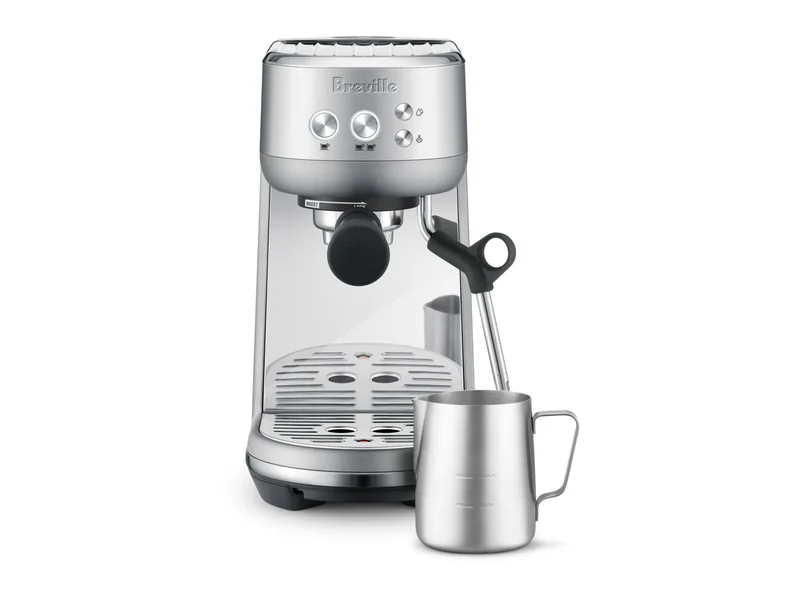
The Bambino BES450 is our documented example of a machine to research for this task. Breville's US page lists 11.9 by 6.1 by 13.5 inches under “Dimensions (WxDxH)”. Use that published order when comparing the C30 listing, and confirm the dimensions with Breville if the fit is tight; your own measurements still decide whether you can fill and clean it comfortably. Check the US model and current specification rather than copying dimensions from a different regional listing.
A small kitchen may also be shared. Ask whether the equipment can stay out without blocking food preparation and whether someone can reach the cabinet while another person makes coffee. Decide which tools can be put away after use. If you must move the machine every day, review the manual's handling instructions and reconsider whether that location will remain practical.
Measure the working area, not just the machine
Measure your intended counter location with the equipment arranged as you would actually use it. Leave a place for the cup and for any removable parts during filling or cleaning. Include the grinder in the drawing if it will live beside the machine. A catalog footprint alone cannot tell you whether you will enjoy using the setup.
Check which way the water tank comes out, how the drip tray is removed and where the power cord must reach. The Bambino manual identifies a removable water tank and removable drip tray. It instructs users to lift the tank for filling. Read the equivalent instructions for any other candidate instead of assuming its access is identical.
A useful test is to make a paper outline from the exact manufacturer's dimensions and place it under the cabinet. Then act out reaching the controls and moving the empty jug. Do not add a guessed clearance number to a product specification. If the manufacturer does not state the clearance you need, ask before ordering. Keep the location stable and follow the manual's placement and electrical instructions. Plan a storage spot for tools that do not need to stay on the counter.
Test a location with a morning rehearsal
Imagine that the only available counter is below a cabinet next to the sink. Before buying, place paper outlines for the machine and any grinder there. Use an empty cup and jug to rehearse your preferred drink. Mark where each object goes while you reach for the controls and remove the tank as the candidate's instructions require.
Then rehearse cleaning. Put the removable parts on the counter and ask whether there is still a safe place to set down the cup. If the setup requires moving food, cords or unrelated appliances every time, consider another location. A machine can fit within a rectangle and still be a poor fit for that particular routine.
Do not interpret this rehearsal as a clearance specification or permission to ignore the manual. Its purpose is to reveal questions. Obtain the manufacturer's answer for any placement requirement that remains unclear before committing to the location.
Continue your setup comparison
Use the complete $500 setup worksheet to keep every required item in the same purchase limit. For the next decision, read Best Home Espresso Machine for a $500 Setup, Best Espresso Machine for Beginners: A First Setup, Best Espresso Grinder for a Budget Home Setup.
Compare a portafilter setup with a capsule setup
For a small kitchen where you want to prepare ground coffee, our conditional choice is to investigate the Bambino BES450. For a kitchen where you prefer Original capsules and espresso or lungo buttons, compare the Nespresso Essenza Mini C30 Piano Black. These formats solve different preparation tasks, so choose the coffee routine before declaring a footprint winner.
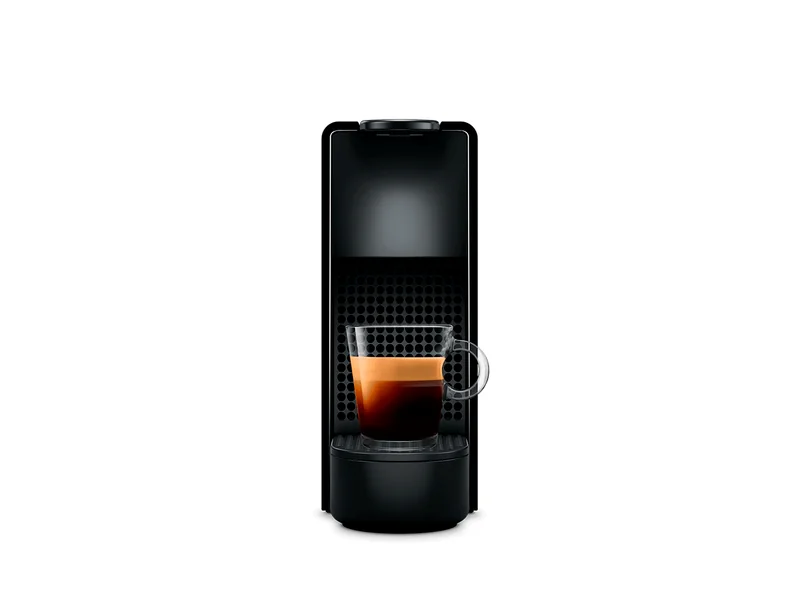
Nespresso's US listing gives the Essenza Mini C30 dimensions as 3.3 by 12.8 by 8 inches. It identifies a removable 20.3-ounce tank and a used-capsule container holding six capsules. Those specifications give you a concrete outline and removable parts to include in a fit exercise. They do not establish the clearance required by every cabinet or the fit of another Essenza housing.
| Proposed location | Candidate to investigate | Fit question |
|---|---|---|
| Narrow space for capsule espresso | Essenza Mini C30, listed at 3.3 by 12.8 by 8 inchesSourceEssenza Mini C30 specifications | Can you fill the tank and empty the capsule container there? |
| Ground-coffee preparation area | Bambino BES450, listed at 11.9 by 6.1 by 13.5 inches (WxDxH) Bambino dimensions, with removable tank and traySourceBambino instruction manual | Can you attach the portafilter and work with the jug? |
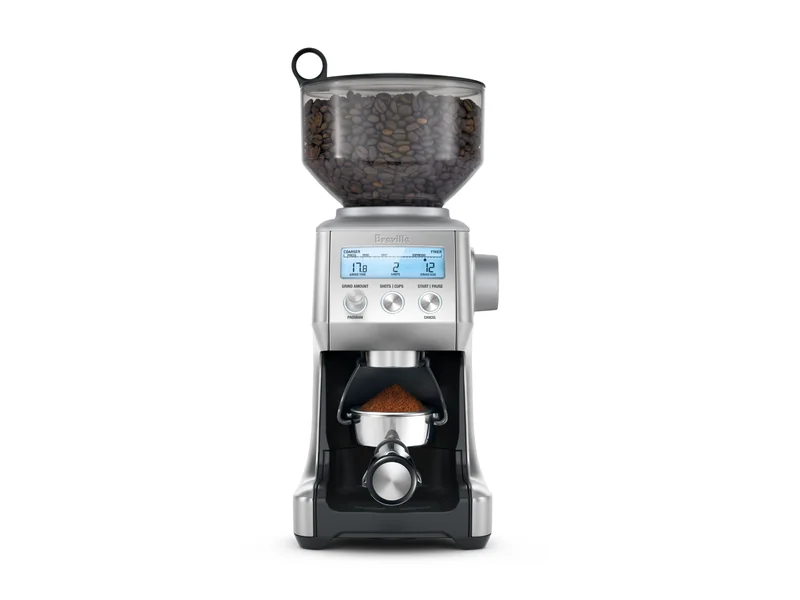
| Whole-bean preparation area | Bambino plus a separate grinderSourcesBambino instruction manualSmart Grinder Pro documentation | Is there a usable second position for grinding and grounds transfer? |
Proposed locationNarrow space for capsule espresso
- Candidate to investigate
- Essenza Mini C30, listed at 3.3 by 12.8 by 8 inchesSourceEssenza Mini C30 specifications
- Fit question
- Can you fill the tank and empty the capsule container there?
Proposed locationGround-coffee preparation area
- Candidate to investigate
- Bambino BES450, listed at 11.9 by 6.1 by 13.5 inches (WxDxH) Bambino dimensions, with removable tank and traySourceBambino instruction manual
- Fit question
- Can you attach the portafilter and work with the jug?
Proposed locationWhole-bean preparation area
- Candidate to investigate
- Bambino plus a separate grinderSourcesBambino instruction manualSmart Grinder Pro documentation
- Fit question
- Is there a usable second position for grinding and grounds transfer?
Our fit recommendation is the C30 route when its documented capsule drinks match your preference and the measured location permits its removable parts to be handled. Choose the Bambino route when learning ground-coffee preparation matters more than minimizing the number of preparation tools. Measure the working space before deciding whether either format fits your counter.
Mark three spaces on the counter
Mark the space occupied while the machine is idle, the space needed during preparation and the space needed while cleaning. Use different pencil outlines on one drawing rather than assuming these are the same rectangle. Keep your actual cups and empty jug nearby so you can rehearse placing them without using hot equipment.
For the capsule route, mark a place for unused capsules and a place to set the removable container while emptying it. For the portafilter route, mark a place to fill and tamp the basket. If your plan includes whole beans, add the grinder and the grounds-transfer action. The purpose is to account for your chosen routine rather than apply a guessed universal clearance.
Then mark anything already occupying those areas: a cutting board, another appliance, a cabinet door or the edge of the sink. Ask whether the arrangement works during a normal meal preparation period. A machine that requires you to rearrange the kitchen whenever someone makes breakfast may not be the compact solution you wanted.
Think through filling before placing the order
The BES450 manual directs users to lift the removable tank for filling. Source: Bambino instruction manual Try that action in your planned location using the measurements and instructions, without guessing that a low cabinet will permit it. If the tank has to be removed from the machine, identify where it can rest while being filled and how you will return it.
For the C30, use its exact instructions to check tank access rather than transferring the Bambino's procedure to it. A removable tank specification tells you that a part comes out; it does not tell you that your cabinet leaves enough room for your hand. Where a clearance remains unclear, request the manufacturer's guidance before buying.
Do the same exercise for the tray or capsule container. Imagine it containing liquid or used coffee rather than being empty in a showroom. Check whether you can move it toward the sink without reaching over another hot appliance. If you cannot demonstrate a comfortable route, revise the proposed layout before deciding the nominal width is acceptable.
Keep the grinder decision visible
A compact machine body can be only one component of the setup. With the BES450, the manual's dual-wall preground route and single-wall fresh-ground route lead to different equipment plans. Source: Bambino instruction manual If you choose fresh grinding, reserve a position for the grinder from the beginning. Do not postpone that space decision until after the machine arrives.
The Smart Grinder Pro is a documented separate-grinder example. Source: Smart Grinder Pro documentation Check its current dimensions and instructions alongside those of the machine. Measure where beans will be added, where the collected grounds will go and where removable parts can be cleaned. The relevant question is whether the combined routine fits, not whether the machine and grinder can be pushed tightly together while unused.
If the separate setup fails your layout exercise, reconsider the coffee route or another location. A capsule setup may be worth comparing if you accept its capsule system. An integrated grinder deserves a separate measured drawing if you want whole beans. Neither option should inherit a fit approval from a drawing made for different equipment.
Choose the arrangement you can leave ready
Our suggested final test is to put paper outlines in position for an ordinary day and ask each user to explain the preparation sequence. Include filling, brewing, emptying and storing the tools. If the sequence depends on an unexplained extra surface, add that surface to the plan or reject the arrangement.
For someone choosing the C30, the conclusion should read: the documented capsule drinks suit me and I have checked access to its removable parts. For someone choosing the Bambino, it should read: I have room to prepare the basket and perform my chosen milk routine. Those conclusions make the compact recommendation specific to a usable setup.
Keep the drawing with the model number and manufacturer dimensions. Recheck it if you change the machine, grinder or intended location before checkout. A drawing for one regional listing or housing should not become evidence that a different package will fit. When the space is tight, resolving one uncertain measurement is more valuable than adding another decorative accessory to the cart.
Frequently asked questions
What makes an espresso machine fit a small kitchen?
It must fit the working routine as well as the counter outline. Measure room for filling, removing parts and handling the cup and jug.
Can I fill the Bambino tank under a cabinet?
The manual instructs users to lift its removable tank for filling. Measure the actual space needed in your kitchen before choosing that location.
Should I include a separate grinder in my measurements?
Yes, if you plan to use one there. Allow working space for its controls and removable components as described by its manufacturer.
Does compact mean inexpensive?
It does not establish a price. Check current price and the complete setup total rather than assuming a smaller body meets your budget.
Which dimensions should I use?
Use the current manufacturer specifications for the exact US model. Confirm any necessary clearance that the manufacturer does not state.
Sources
- Breville US: the Bambino BES450(provider page)Accessed
- Breville: Bambino US instruction manual, linked by manufacturer(provider page)Accessed
- Breville US: Smart Grinder Pro BCG820(provider page)Accessed
- Essenza Mini C30 specifications(provider page)Accessed
Related guides
- Best Home Espresso Machine for a $500 SetupCompare home espresso setup choices for a $500 planning limit, with Bambino basket guidance and a checklist for complete checkout costs.Read the guide
- Espresso Machine Accessories: Buy What FitsCheck included Bambino accessories before buying extras, identify missing tools and assess compatibility for your chosen espresso routine.Read the guide