On this page
- Prepare for the first attempt
- Select the basket and the coffee route
- Dose, distribute and tamp
- Rinse the group head and lock in the holder
- Start and stop the espresso
- Observe the pour before changing preparation
- Add milk only with its own safe routine
- Finish with the specified care
- Frequently asked questions
Prepare for the first attempt
Set out the parts that come with the machine and identify each against the manual. Read the first-use section before adding coffee. The Bambino instructions call for filling and seating the tank, positioning a container and running the first-use cycle. Those are directions for that model; another machine may require a different sequence.
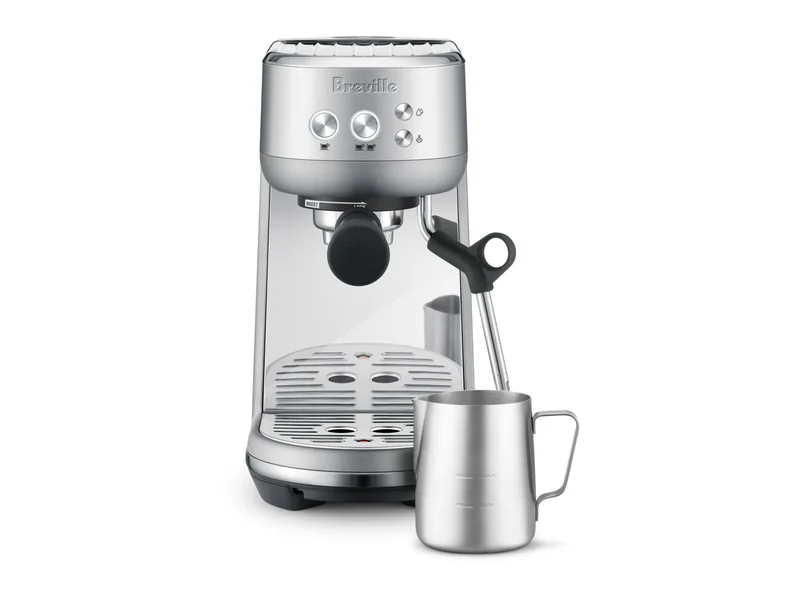
Choose one coffee and one basket. The purpose of the first session is to learn the routine and create a record you can repeat. Do not try to reproduce a social media recipe and several equipment modifications at once. Keep the controls visible and leave the workspace clear enough to deal safely with hot water and removable parts.
Before brewing, decide what you will record: the basket, coffee, grind setting if applicable, dose and the drink collected. You can add a short taste note afterward. This is an observation sheet, not a universal recipe. Do not force the machine to follow an invented pressure target or an extraction time that conflicts with its instructions.
For plain meanings of dose, yield, channeling and other brewing terms, see our espresso glossary.
Select the basket and the coffee route
For the Bambino BES450, use a single-wall basket with freshly ground beans or a dual-wall basket with preground coffee. The manual distinguishes the one-cup basket from the two-cup basket; it describes the latter for two cups or a stronger single drink. Fit the selected basket into the portafilter, the handled holder that locks into the brewing head. These are BES450 instructions, not compatibility claims for another machine.
Choose the basket before weighing or grinding the coffee. The manual gives 8 to 11 grams for its one-cup basket and 16 to 19 grams for its two-cup basket. Use the range for the basket actually installed, rather than treating a double-basket recipe as a single-basket dose. The manufacturer also says to adjust grind amount and size when switching between these baskets.
Write the basket choice at the top of your preparation record. This makes the next attempt easier to interpret: a change of basket would otherwise be hidden behind a note about changing grind. Keep the coffee packaging available so you can identify what you used. If you switch from preground coffee to whole beans, start a new baseline rather than comparing the result as if only one setting had changed.
Dose, distribute and tamp
With the basket seated in the portafilter, add the ground coffee. Breville directs the user to tap the holder to settle and distribute the grounds, then press them firmly with the tamper. The manual emphasizes consistency of tamp pressure and gives the tamper cap's position against the basket rim as a fill-level guide after tamping. Consult its illustration while preparing your first basket.
Keep the holder stable while you work. Check that the coffee bed is prepared before moving to the machine, rather than trying to tamp once the portafilter is attached. Do not add an unfamiliar tool and a different basket during the same practice attempt. You need a repeatable preparation process before you can tell whether a new accessory solves a problem.
For freshly ground coffee, record the grinder setting and dose separately. A setting identifies the adjustment you chose; it does not measure the amount of coffee in the basket. If you weigh a dose, record what actually went into the basket. Do not assume that a grinder timer establishes the same weight for every coffee. For preground coffee, leave the grinder field empty and identify the coffee instead.
Rinse the group head and lock in the holder
Before inserting the prepared portafilter, the Bambino manual calls for a short water flow through the group head using the one-cup or two-cup control. It describes this as stabilizing temperature before extraction. Keep clear of the hot discharge and follow the manual's placement and safety instructions. This brewing rinse follows first-use preparation; it does not replace the initial setup cycle.
Align the handle with the machine's INSERT position, insert the portafilter into the group head and turn toward the center until resistance is felt, as the manual describes. Put your cup beneath the outlets on the drip tray. Use the model's diagram to identify the alignment rather than copying the handle angle of a different machine.
Pause before starting the shot. Your cup should already be positioned, and you should know which control you intend to use. If you are recording collected drink weight, arrange the cup and your measuring equipment before extraction begins. Do not rearrange a crowded counter while hot coffee is dispensing. A clear starting position makes the brewing step easier to observe and repeat.
Start and stop the espresso
For the Bambino preset workflow, briefly press the matching one-cup or two-cup button. The machine dispenses the programmed volume and stops automatically. The manual also states that pressing the corresponding cup button during that extraction stops it immediately. Read those controls before starting, so you are not searching for a stopping method during an unexpected pour.
If you deliberately choose the manual workflow instead, the same manual describes holding a cup button for more than a second to begin pre-infusion, releasing it to start extraction, and pressing any button to stop. Pre-infusion is the initial stage before the main extraction in that documented control sequence. Keep the manual open for the exact model directions; a brief preset press and a held press are different operations.
Choose one workflow for the first comparison. Do not alternate between a preset stop and a manually chosen stop without recording the difference. A change in the collected drink may come from your stopping choice rather than from the grind. The aim is to know what you did, not to hit an unsupported universal shot time. A recipe from another machine is not a reason to override this machine's safety instructions.
Observe the pour before changing preparation
Record whether coffee flowed readily or was restricted, along with the amount collected if you measured it. The Bambino manual connects overly coarse grinding with fast flow and an under-extracted result, while grinding too finely can restrict flow and produce an over-extracted result. Its troubleshooting guidance also addresses insufficient coffee. Use those explanations as model-specific diagnostic clues.
Taste the drink when it is safe to do so and describe your preference in ordinary words. A note such as wanting a less intense drink is more useful for your next choice than an invented numerical quality score. If the observation does not point to a clear preparation change, consult the relevant manual troubleshooting entry before trying another variable.
For the next attempt, keep the basket and coffee unchanged while testing one adjustment. Write the reason beside the change. If you alter the grind and the dose together, you may prefer the result but cannot confidently attribute that preference to either change. This is a practical way to learn your routine; it is not a claim that one recipe suits every coffee or that a single adjustment guarantees a better drink.
Add milk only with its own safe routine
The Bambino BES450 uses manual milk texturing. Preparing the espresso with a preset button does not automate that separate task. Its manual explains jug positioning and the steam sequence, including purging and cleaning the wand. Follow those directions and the hot-water and steam precautions before making a milk drink.
For a first practice session, learn the espresso controls before adding another unfamiliar operation. When you do add milk, organize the jug and the cleaning materials before steaming. Keep a separate note about milk preparation so a change in the finished drink is not automatically blamed on the espresso. Decide whether you are comparing the espresso itself or the milk drink you normally consume.
Do not borrow a milk-cleaning shortcut from a different appliance. The documented wand care belongs to this machine and should be followed even when you make only one drink. If another person shares the machine, show them the actual instructions rather than relying on a remembered button sequence. A shared written routine is useful only if everyone follows the same safety steps.
Finish with the specified care
Read the Bambino care instructions before removing hot parts. The manual covers the portafilter and basket as well as the steam wand, and it states that the portafilter is not dishwasher safe. Use the approved care method for each part rather than assuming everything removable can go into a dishwasher.
Keep routine cleanup separate from descaling. The manual provides a descaling procedure for the machine; follow its specified sequence and materials when required. Do not substitute a household chemical because it is described online as suitable for coffee equipment in general. Consult manufacturer guidance if the instructions for your exact unit are unclear.
Leave your preparation record where you can find it for the next session. Store the machine instructions with it, including any notes about a control you used differently. Your next attempt should begin from a known basket and preparation choice rather than a guess about what worked. If the machine behaves abnormally or the manual directs you to stop, resolve that issue before continuing practice.
Make a simple preparation log with a separate line for each attempt. Record the coffee, basket and any grinder setting, then the dose and the drink collected if you measure them. Add one sentence describing what you liked or wanted to change. Keep manufacturer instructions beside the log rather than copying an unrelated recipe into it.
When you try a change, write the reason first. This helps distinguish an adjustment to preparation from a switch in personal preference. If you do not know which part of the process to change, consult the troubleshooting section before making several changes together.
Stop the practice session when you cannot explain the next adjustment. You can return after reading the relevant instructions. There is no need to turn learning into a claim about how many attempts a beginner should need. A useful record lets you resume from a known setup instead of guessing what happened last time.
If equipment is still missing, use the home espresso hub to plan the complete setup. Compare the beginner machine guide, espresso grinders and accessory priorities before buying tools for the procedure above.
Frequently asked questions
What should I do before my first espresso?
Read the exact model manual and complete its first-use preparation. The Bambino instructions include a first-use rinsing cycle.
Which Bambino basket is for preground coffee?
The official manual specifies dual-wall baskets for preground coffee and single-wall baskets for freshly ground whole beans.
Should I follow one recipe for every machine?
Use the manufacturer instructions for the machine and basket. Treat general recipes as starting ideas only when they are consistent with that guidance.
How should I compare two attempts?
Keep a record of your starting setup and change one preparation variable at a time. Compare the drink you intend to make, including milk if that is your routine.
What do I do after steaming milk?
Follow the model-specific purge and cleaning sequence. The Bambino manual includes steam-wand care and precautions for hot water and steam.
Sources
- Breville: Bambino US instruction manual, linked by manufacturer(provider page)Accessed
- Breville US: the Bambino BES450(provider page)Accessed
Related guides
- Best Espresso Machine for Beginners: A First SetupChoose a first espresso workflow using the Bambino basket instructions, a simple learning plan and checks for equipment you need.Read the guide
- Espresso Machine Accessories: Buy What FitsCheck included Bambino accessories before buying extras, identify missing tools and assess compatibility for your chosen espresso routine.Read the guide