On this page
- Compare a documented automatic candidate
- Decide how much milk work you want
- Plan for service and shared use
- Decide which manual task is the deal breaker
- Use the Magnifica Start as the automatic baseline
- Describe automation as a sequence of tasks
- Compare an automatic morning with a practice session
- Read care instructions before assigning a convenience score
- Set a limit for convenience spending
- Make the final choice by the task removed
- Frequently asked questions
Compare a documented automatic candidate
The De'Longhi Magnifica Start ECAM22022B is a concrete automatic-coffee candidate. Its US manufacturer page describes a built-in conical burr grinder with 13 settings and one-touch recipes for espresso, coffee and Americano. It separately identifies manual milk frothing. The same page listed $449.95 on November 22, 2026, which is under $500 on its listed price before tax and delivery, though that is not a deal claim. Choose it as a candidate when you want the documented automatic coffee workflow but are willing to prepare milk yourself. This is a workflow recommendation, not a taste-test result.
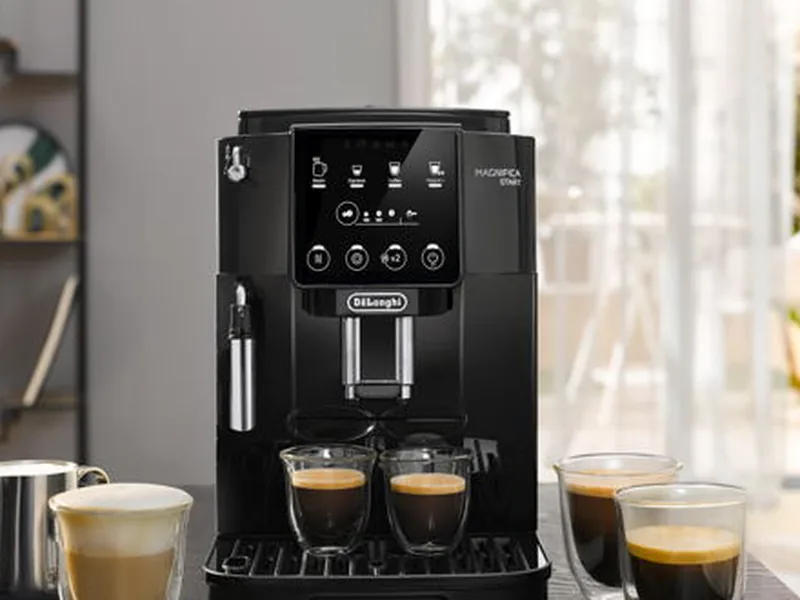
Compare it with the Bambino BES450 as a different level of hands-on work. The Bambino manual describes loading a basket, dosing and tamping the coffee, then attaching the portafilter before extraction. It also documents manual milk texturing. A preset shot button on that machine therefore solves a narrower task than the automatic-coffee format described for the Magnifica Start.
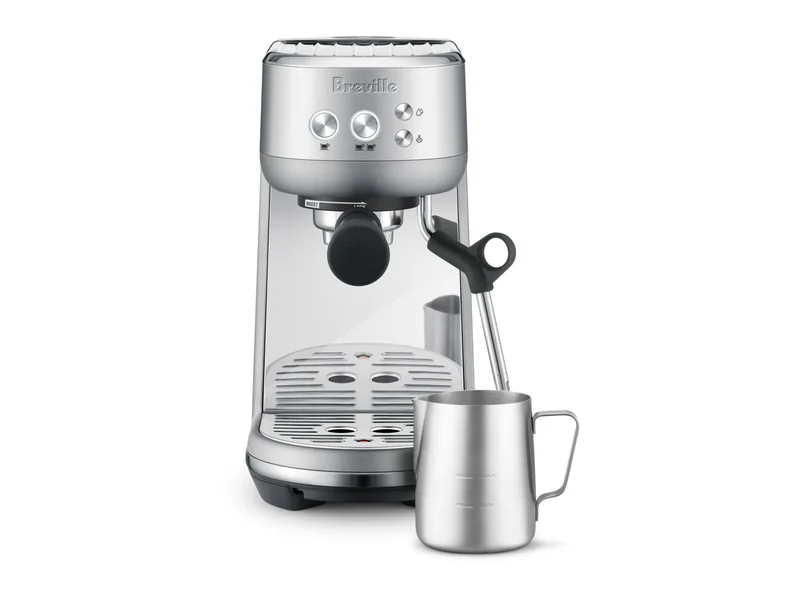
For a buyer who wants to learn manual coffee preparation, that Bambino workflow may be the more relevant choice. For a buyer who wants a machine to handle the documented bean-to-cup coffee process, shortlist the ECAM22022B. Neither candidate establishes automatic milk preparation from the cited evidence. If hands-free milk is your deciding requirement, neither documented workflow meets that requirement.
Check current price for the exact US package. Read its own care instructions before purchasing and confirm that its maintenance routine suits the household. Do not transfer the Bambino's cleaning procedure or basket specifications to the De'Longhi. The buying decision here is about which preparation task you want the machine to take over, with cost and care checked separately.
Decide how much milk work you want
List the drinks you make on an ordinary weekday. If they include steamed milk, read the milk instructions before comparing the espresso buttons. On the Bambino BES450, Breville describes manual milk texturing with a steam wand. That means a buyer should assess the hands-on milk task separately from the preset shot controls. It does not justify calling the whole machine automatic.
The manual directs users to purge and clean the steam wand, and it includes warnings about hot steam and water. Follow its sequence, use the provided grip and keep hands clear of the outlet. Do not use a general buying guide as a substitute for those safety instructions.
Picture the complete drink sequence in your own kitchen. Where will the milk jug sit before steaming? Where can it go afterward without obstructing the controls? Can you reach the cleaning cloth and sink without carrying a hot container across a crowded counter? These questions can help you reject an awkward setup before buying. If another household member will use the machine, have them read the same instructions. The routine should work for the person making the drink, rather than depend on one enthusiast being present.
Plan for service and shared use
Before choosing equipment, find the official support page for the exact US model. Read what the manufacturer asks you to do when a fault occurs. Check the warranty and the seller's return terms separately. These documents answer different questions, and a return window is not a promise about long-term repair costs.
With integrated equipment, ask how service works if the grinding or brewing function develops a fault. With separate equipment, ask the equivalent question for each unit. Do not assume either format is cheaper to repair without written terms. Keep the receipt and model details with the manual so you can identify the machine accurately when seeking help.
If several people will use the setup, agree on one starting routine and a place to record settings. A different coffee or basket can call for changes, so a written baseline is more useful than an argument over whose setting is correct. Show everyone the safety and cleaning instructions. Make the setup choice based on the household's actual willingness to use and maintain it. Extra controls have little value if nobody wants to learn what they do.
Decide which manual task is the deal breaker
As a worked comparison, suppose you are happy to load coffee but do not want to texture milk manually. Put that requirement at the top of the shortlist. A candidate with preset shot controls still needs a separately verified milk function before it can meet your requirement. Do not let a longer list of unrelated features compensate for the missing task.
Another household may accept manual milk work but want grinding integrated into the appliance. Its shortlist can be different even at the same spending limit. Write each person's nonnegotiable task explicitly, then read the corresponding manual sections together.
If no documented candidate meets the requirement within your current checkout limit, keep the money and reconsider the requirement or timing. Do not relabel a partially automated machine as a fully automatic solution to make a recommendation possible. A clear reason to defer is more useful than a purchase that fails the original brief.
Use the Magnifica Start as the automatic baseline
The ECAM22022B is our automatic black-coffee candidate because DeLonghi documents a bean grinder and one-touch espresso, coffee and Americano on that exact model. Its manual milk frother is the qualification that matters most for latte buyers. Choose it to investigate reduced coffee preparation, while retaining a separate milk task.
Compare that with the Breville Barista Express BES870. An integrated grinder is present, but Breville describes hands-on preparation and manual milk texturing. Source: Barista Express documentation Our editorial choice between the two is therefore based on whether you want to prepare a portafilter. Counting drink buttons alone would miss the main workflow difference.
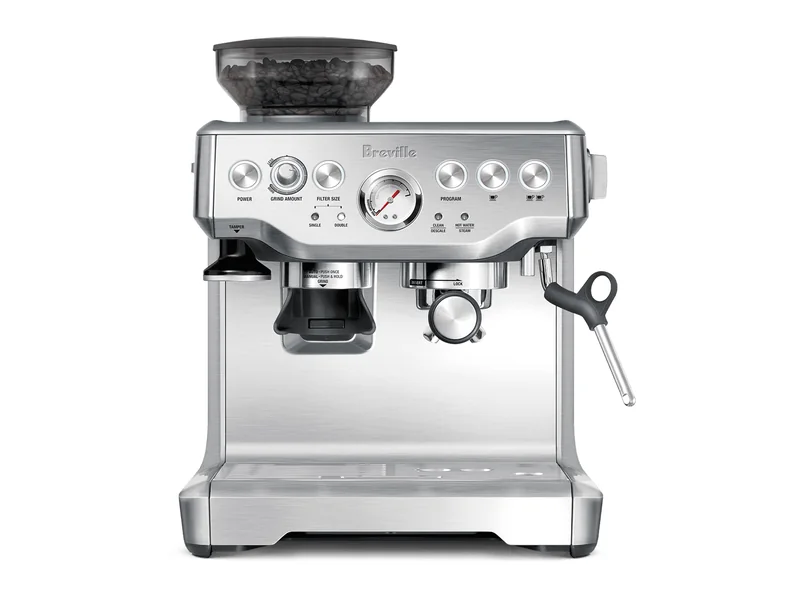
If you want a milk drink made automatically from beginning to end, neither the ECAM22022B's manual frother nor the BES870's manual steam wand establishes that capability. Source: Magnifica Start documentationBarista Express documentation Remove both from that specific shortlist unless you are willing to change the milk requirement. A machine can be a relevant automatic coffee candidate and still be wrong for your automatic latte requirement.
Describe automation as a sequence of tasks
Make a row for each action: supply beans, select a drink, handle coffee grounds, prepare milk and clean afterward. Next to each row, write whether you want the appliance or the user to perform it. This turns an ambiguous request for an automatic machine into requirements that can be checked against documentation.
For the documented Magnifica Start, the one-touch coffee menu answers part of that checklist, while the manual frother answers another part differently. Source: Magnifica Start documentation Do not let a retailer's broad category label override the exact model's description. Check each requirement separately, especially when two machines in the same family have different milk arrangements.
This method also helps when replacing an existing machine. Name the step you dislike today. If it is filling and tamping a basket, automatic coffee preparation is directly relevant. If it is rinsing milk components, a black-coffee button may not address the problem. Investigate the actual cleaning instructions before deciding what kind of automation would help.
Compare an automatic morning with a practice session
Imagine one user who wants a black coffee while preparing breakfast and another who enjoys adjusting a shot on a weekend. The first user's proposed routine should begin with the documented one-touch options on the ECAM22022B. The second can compare a portafilter machine's controls and accept the extra preparation as part of the activity. These are preference examples, not measured preparation-time claims.
Write down which routine you expect most often. A hobby session that happens occasionally should not automatically determine the appliance for every rushed morning. Equally, avoid paying for automatic coffee preparation if practicing manual basket preparation is the reason you want espresso equipment.
If both people share one machine, discuss the compromise explicitly. Ask each person to describe an acceptable complete drink sequence, including cleanup. A feature list that satisfies one user may leave the other depending on help. Choose from requirements both can accept rather than hoping an unfamiliar control panel will resolve the disagreement.
Read care instructions before assigning a convenience score
A one-touch drink claim concerns drink preparation. It does not establish the frequency, duration or difficulty of every care task. Do not turn it into an unsupported statement that one machine requires less maintenance than another. Compare the exact manuals for routine cleaning, descaling, removable parts and storage.
Our suggested care worksheet has three columns: the named task, the manufacturer's instruction and who in the household will perform it. Leave a blank where the documentation does not answer a question. Resolve that blank with the manufacturer before buying rather than filling it with a guess from another model's routine.
Keep products and procedures model-specific. A descaling instruction for the Bambino is not evidence for the Magnifica Start. Likewise, a removable component on one automatic machine should not be assumed removable on another. A buying guide can identify the care questions, but the applicable instructions must govern the actual work.
Set a limit for convenience spending
Our advice is to decide how much the particular automatic task is worth to you before seeing bundles. Compare the delivered machine cost with the manual alternative you would otherwise choose. Include any grinder required by that alternative so the comparison concerns complete coffee routes rather than an appliance against an incomplete cart.
Do not assume a quoted sale will remain available or that an advertised machine price includes tax and delivery. Enter current checkout figures for your location and keep a record of what the package contains. No current price ceiling for the ECAM22022B is established here.
If the automatic route exceeds the budget, identify the compromise you would accept. It may be manual basket preparation, a different drink format or waiting. Do not describe a manual milk machine as fully automatic merely to make the remaining cart look like the original plan. Preserve the requirement and evaluate the compromise honestly.
Make the final choice by the task removed
Choose the ECAM22022B to investigate one-touch black-coffee preparation with manual milk. Choose the BES870 format when having grinding and portafilter preparation together is desirable and the hands-on work is acceptable. Choose neither for a requirement that the entire latte be prepared automatically on the documented features alone.
Before checkout, repeat your requirement in one sentence and point to the exact model documentation supporting it. Then check the seller's package, return conditions and service arrangements. A clear reason to buy is more useful than a category label, and it gives you a concrete basis for rejecting a substitute model if the original choice is unavailable.
Use the home espresso hub to compare the equipment routes. For hands-on alternatives, compare beginner espresso machines and machines with a grinder. The accessory guide separates tools that come with the machine from optional purchases.
Frequently asked questions
What does automatic mean on an espresso listing?
Check the exact operation described. Preset shot volumes, built-in grinding and automatic milk preparation are separate features that need individual confirmation.
Which automatic coffee candidate is documented here?
De'Longhi describes the Magnifica Start ECAM22022B with a built-in conical burr grinder and one-touch espresso, coffee and Americano recipes. Milk frothing is manual.
Does the Barista Express include a grinder?
Breville describes an integrated conical burr grinder on the BES870. Its product page also describes manual milk texturing.
Is there a verified fully automatic pick under $500 here?
No. This guide does not establish a current qualifying model and checkout price. Check current price and all required functions before buying.
Will an automatic machine remove all cleaning work?
Read the exact model cleaning instructions before deciding. Do not infer a maintenance routine from the word automatic.
Sources
- Breville: Bambino US instruction manual, linked by manufacturer(provider page)Accessed
- Breville US: Barista Express BES870(provider page)Accessed
- Breville US: the Bambino BES450(provider page)Accessed
- DeLonghi US: Magnifica Start ECAM22022B(provider page)Accessed
Related guides
- Best Home Espresso Machine for a $500 SetupCompare home espresso setup choices for a $500 planning limit, with Bambino basket guidance and a checklist for complete checkout costs.Read the guide
- Best Compact Espresso Machine: Fit Your KitchenCheck whether an espresso setup fits your kitchen by measuring working space, tank access and the room needed for a separate grinder.Read the guide